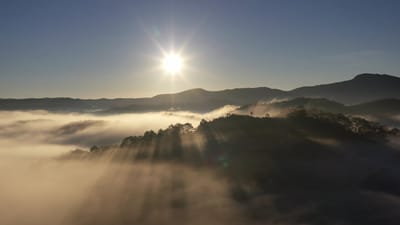
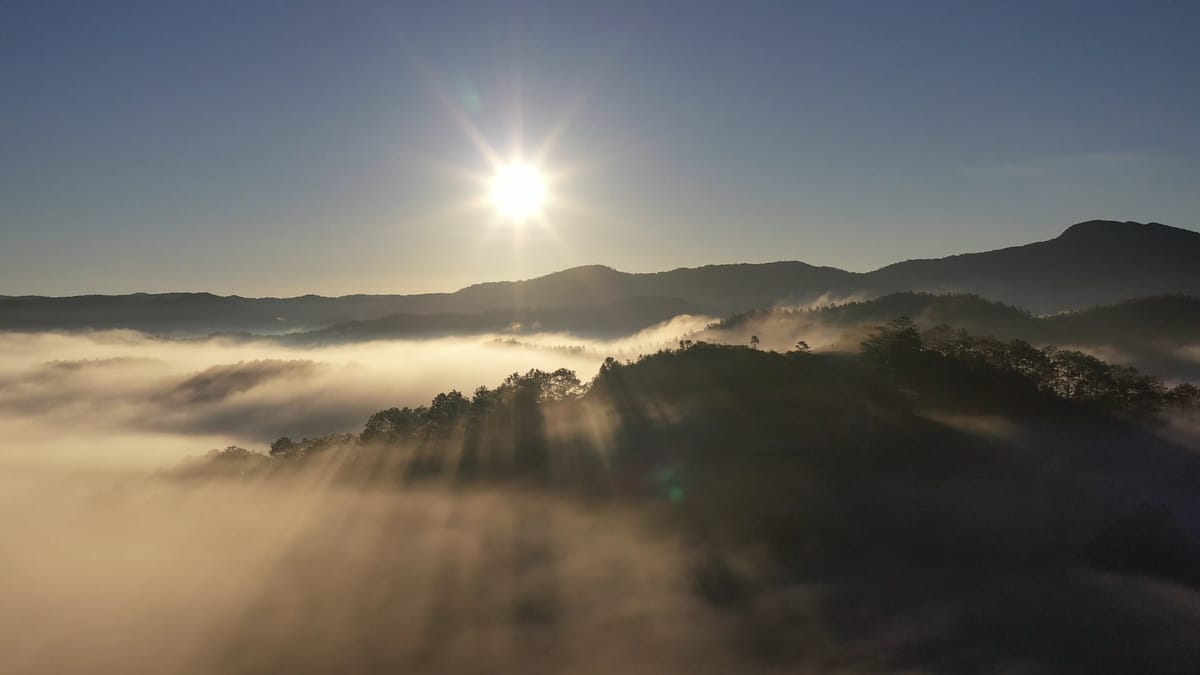
First light: nineteen seconds above the fog

Three mornings, one missed alarm and a valley full of cloud.
We had nineteen seconds of good light. That is the whole film, and it took three mornings, one missed alarm and a very cold thermos to get it.
Chapters
- 0:00 Before the sun
- 0:06 First light
- 0:13 The valley fills
Why this ridge
We found the ridge on a map, not in person. The contour lines showed a narrow shoulder facing east, with a valley below that holds cloud on still autumn mornings. The local forecast gave us three chances in one week: clear sky above, no wind, and a big drop in temperature overnight. Those are the conditions that make a valley fill with fog like a bath.
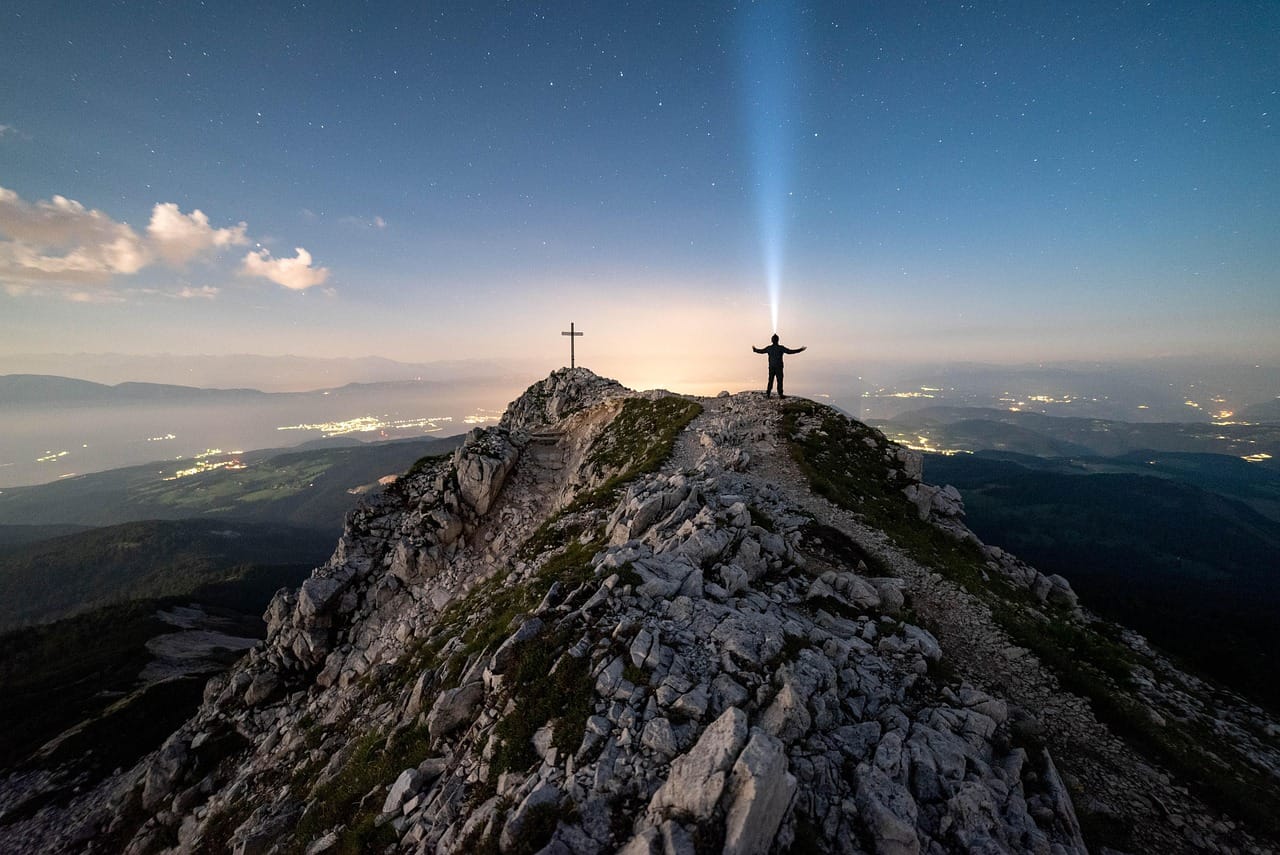
The walk up takes fifty minutes in the dark. We did it three times.
Morning one: too early
On the first morning we arrived, set up, and watched the sky turn from black to navy to grey. The fog was there. The sun was not. A band of cloud on the horizon swallowed the sunrise, and by the time the sun climbed above it, the fog had started to lift. We filmed forty minutes of flat grey and drank the thermos.
Morning two: the alarm
We will not talk about morning two.
Morning three: nineteen seconds
On the third morning everything lined up. The fog lay deep and still. The horizon was clear. At 06:42 the sun touched the edge of the far hills, and for about half a minute the light ran across the top of the cloud like water.
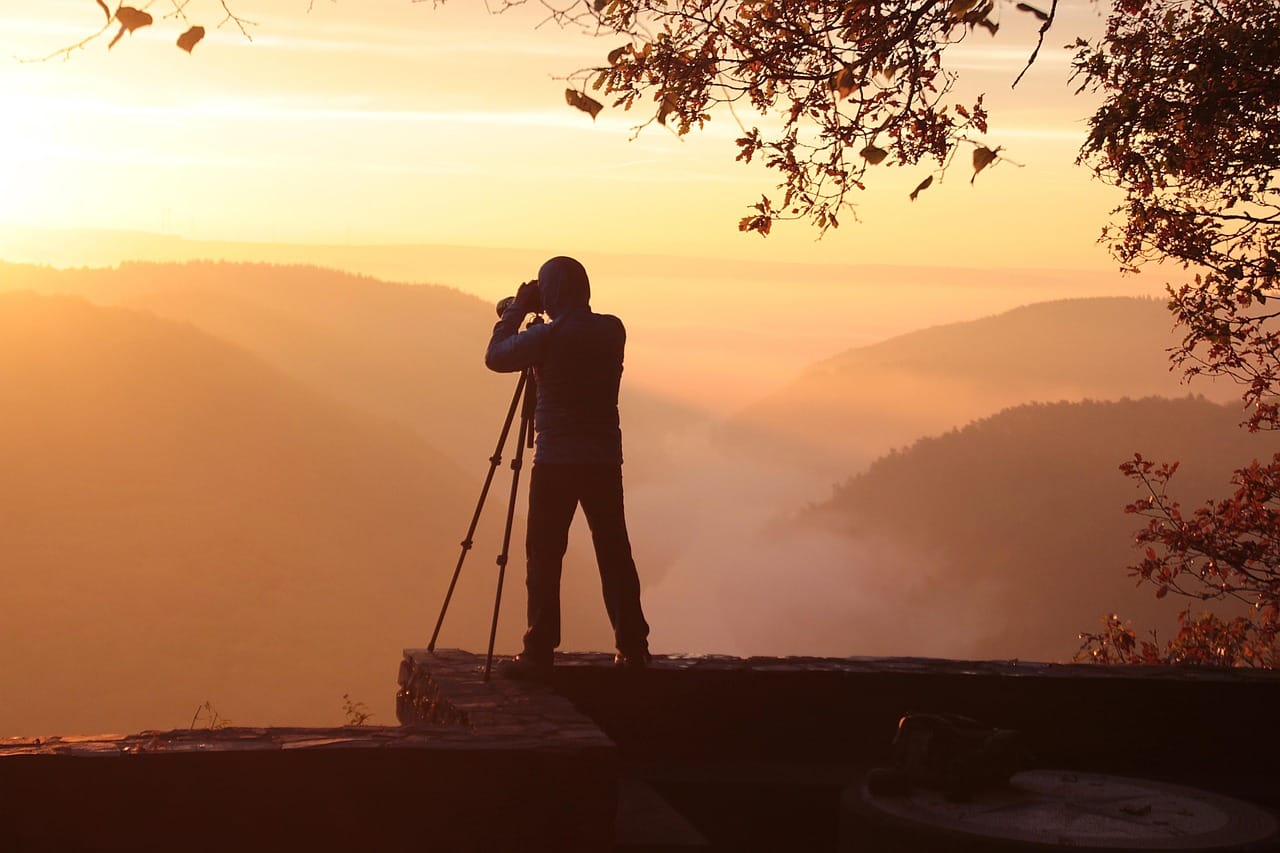
We filmed it from a tripod with a 70–200 mm lens at 120 mm, locked off, no movement. We wanted the light to be the only thing that moved.
A locked-off shot is a promise to the viewer: nothing is going to happen except the thing that matters.
Noa Park
What we changed in the edit
Almost nothing. The film is a single shot, trimmed at both ends. We lifted the shadows a little so the valley does not go completely black on phone screens, and we cooled the first six seconds slightly so the warm light feels warmer when it arrives. That is the whole grade.
The sound is real: wind on the microphone, a bird at 0:11, and the tiny click of the camera's fan. Lina tried music under it and we all agreed it was worse.
Settings, for the curious
| Setting | Value |
|---|---|
| Lens | 70–200 mm at 120 mm |
| Frame rate | 25 fps |
| Shutter | 1/50 s |
| Aperture | f/8 |
| ISO | 200 |
| Profile | Log, graded to Rec. 709 |
Watch it again
Watch the left third of the frame from 0:13. The fog is moving: slowly, like breathing. We did not see it while filming. We only noticed it on the laptop, back in the car, with frozen hands and the heater on full.
The long version
Members can watch the full four-minute take, uncut, from the moment the sun appears to the moment the fog starts to lift. It is not a better film. But several people have told us they leave it on in the background while they work, which is the nicest compliment a four-minute shot of fog could hope for.
Why nineteen seconds is enough
We are often asked why our films are so short. For this one, the answer is simple: nineteen seconds is how long the light was perfect. Before that, it was not quite there. After that, it was ordinary morning light. A longer film would have been a film about waiting, and we had already made that film three times without meaning to.
What we would do differently
We would sleep closer. The fifty-minute walk in the dark was fine the first time and miserable the third. Next autumn we will camp on the shoulder below the ridge, which means carrying a tent as well as the bag, but also means being in position with twenty extra minutes of sleep. We would also bring a second, wider lens. At 0:13 the fog starts to pour over a lower ridge on the left, just out of frame. A wider shot, running on a second camera, would have caught it. You always find the second film once the first one is finished.