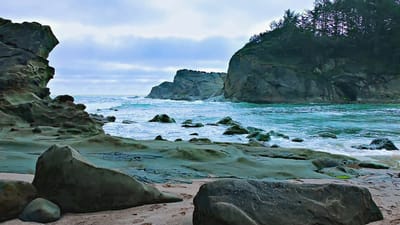
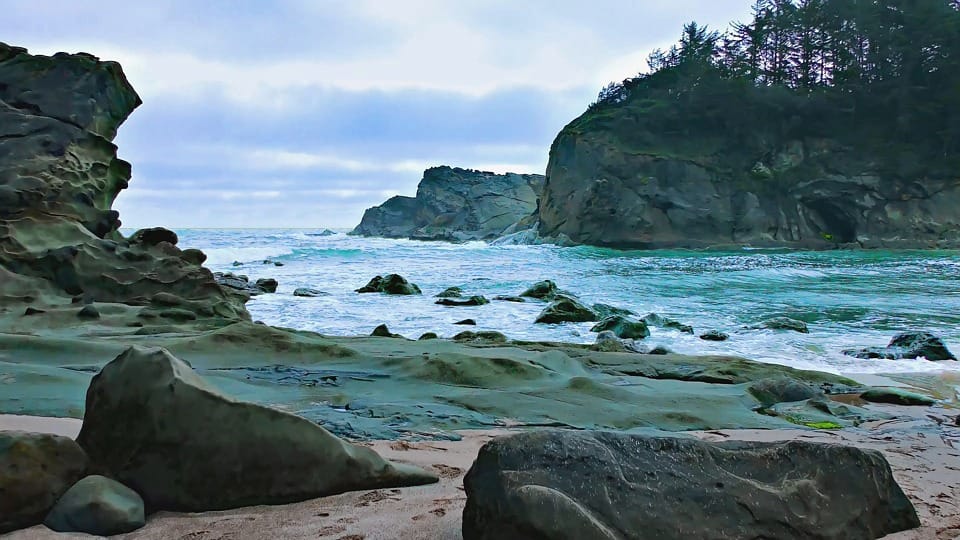
The tide comes in

Three hours on a rock for twenty-five seconds of a rising spring tide.
The tide comes in at about the speed of a slow walk. We sat on a rock for three hours and filmed twenty-five seconds of it.
Chapters
- 0:00 Rocks at low water
- 0:08 The first wave
- 0:17 High water
Reading the tide
Tides are the most predictable thing in nature. You can know, years ahead, exactly when the water will be high on any beach in the world. What you cannot know is what the sea will look like when it gets there.
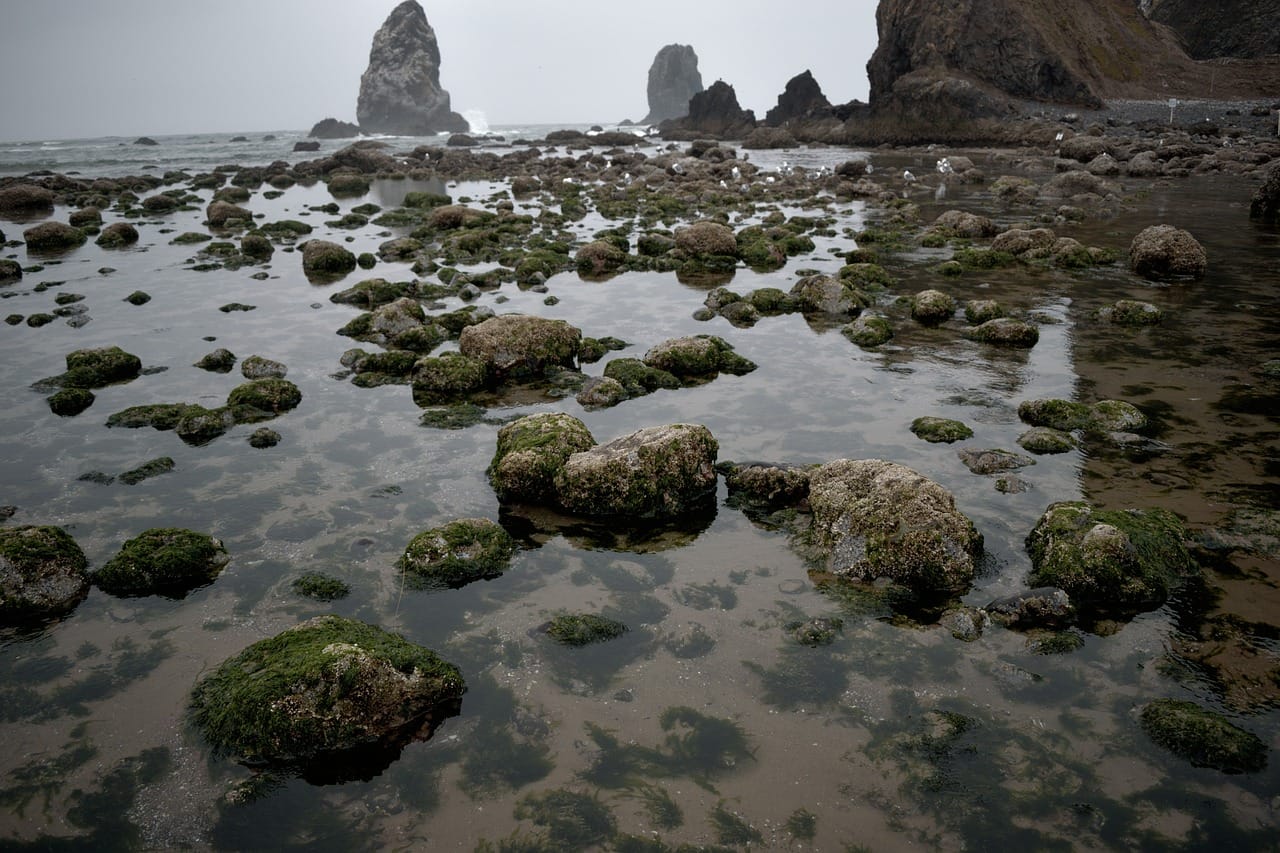
We chose a spring tide, the biggest of the month, because the water moves fastest then. On this coast the difference between low and high water is almost five metres. In three hours, the rocks we walked across to reach our spot were under water.
Where to stand
The most important decision was where not to stand. A rising tide can cut you off. We checked the tide table twice, told someone on the shore where we were, and chose a rock that stays dry even at the highest tides of the year, with an easy path back.
From there, we could film the waves arriving across a flat shelf of rock. At low water the shelf is dry and dull. At mid tide the waves run across it in white sheets. At high water it disappears.
The sea does not care about your shot list. It only cares about the moon.
Theo Brandt
Filming it
We filmed from a tripod at 25 frames a second, with a neutral density filter so we could keep a slow shutter and let the water blur slightly. Every ten minutes we recorded two minutes, so we would have the full story of the tide to choose from.
In the edit, Theo built the film from three moments: the calm at 0:00, the first wave to cross the whole shelf at 0:08, and the moment at 0:17 when the shelf goes under for good.
Sound
The sound is the most important part of this film, and it is almost entirely real. Lina recorded the waves with two microphones, one close to the water and one high on the rock. The close one gives the hiss of water over stone; the high one gives the weight. The two together are what make the last eight seconds feel so heavy.
The three hours
People imagine that filming a tide is boring. It is not, quite. Every wave is different, and after an hour you start to notice patterns: sets of larger waves every few minutes, the way a particular gully fills and empties, the moment when a rock that has been dry all afternoon is suddenly surrounded. Theo kept a notebook of the best moments with their times, which made the edit much faster.
We also watched a family of seals come in with the water, sleep on a rock that was slowly going under, and leave with a look of mild offence when the tide finally reached them. They are not in the film. They deserve their own.
Safety, once more
We say it in every coast film, because it matters: the sea is not a set. People are caught by rising tides every year, often on beaches they know well, because they were looking through a viewfinder instead of at the water. Check the tide table before you leave. Know your way back. Tell someone where you are going. Keep one eye on the sea at all times, and if the shot means standing somewhere you are not sure about, it is not worth it. We would rather miss the wave than be in the news.